Text From Video
Money Saving Minute #044 – Five Factors of Credit Scoring
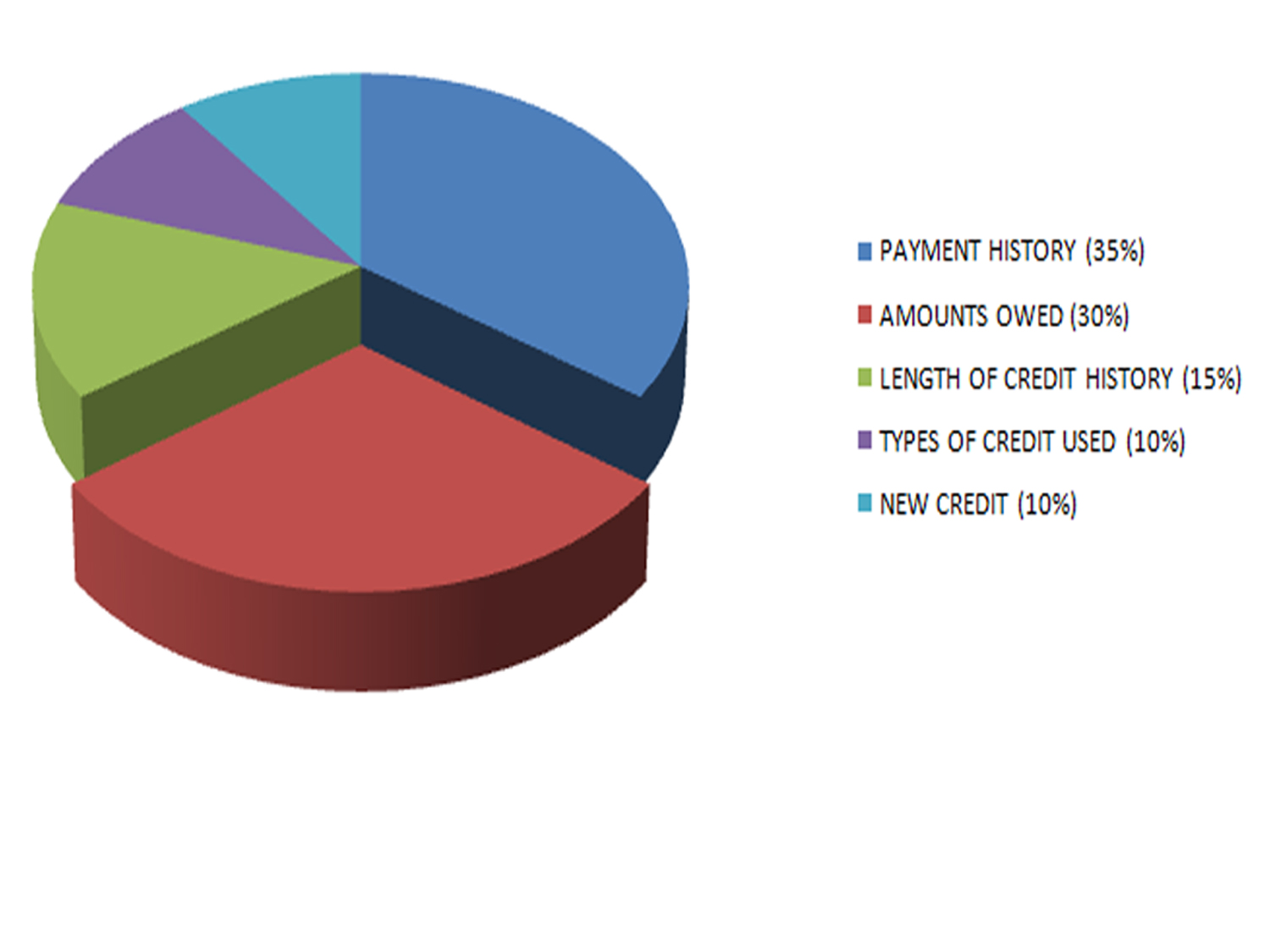
35% PAYMENT HISTORY
30% AMOUNTS OWED
15% LENGTH OF CREDIT HISTORY
10% TYPES OF CREDIT USED
10% NEW CREDIT
30% AMOUNTS OWED
15% LENGTH OF CREDIT HISTORY
10% TYPES OF CREDIT USED
10% NEW CREDIT
Most people don’t really know where that magic credit score number comes from. The general assumption is that if I pay my bills on time then I will have perfect credit. The reality, however, is that paying bills on time will produce good credit but not perfect credit score.
The positive and negative information in your credit report is grouped into five categories. Each category is weighed differently and is calculated into a percentage. These percentages are based on the importance of the five categories for the general population. Please note, however, that every individual's situation is weighed slightly differently. In other words, this is the guideline, not the rule.
Also to note, credit is needed in order for one to have a score. The misnomer that paying cash for purchases will equal great credit is false. Cash is king but it doesn’t buy 800 scores.
Payment history (35%)
Payment history is the most heavily weighed factor in credit scoring. A few late payments can have a large impact on your scores and can stick with you for up to seven years. The number of trade lines that you have in good standings will determine on how quickly you will earn those points back. Please note, however, that having no late payments on your credit report doesn't mean you’ll have perfect credit. Your payment history is just one of the five factors in calculating your credit Scores.
Payment history is the most heavily weighed factor in credit scoring. A few late payments can have a large impact on your scores and can stick with you for up to seven years. The number of trade lines that you have in good standings will determine on how quickly you will earn those points back. Please note, however, that having no late payments on your credit report doesn't mean you’ll have perfect credit. Your payment history is just one of the five factors in calculating your credit Scores.
Amounts owed (30%)
Owing money on credit accounts doesn't necessarily mean that you're a high-risk borrower. However, when a revolving account is reported as close to the account limit, this raises the risk level for the lender and therefore lowers your credit scores. Note that even if you pay off your credit cards in full each month, your credit report will show a balance on those accounts equal to the purchases made that month. If you charge close to your maximum credit line each month consider requesting a credit line increase so that your usage ratio stays under 50%.
Owing money on credit accounts doesn't necessarily mean that you're a high-risk borrower. However, when a revolving account is reported as close to the account limit, this raises the risk level for the lender and therefore lowers your credit scores. Note that even if you pay off your credit cards in full each month, your credit report will show a balance on those accounts equal to the purchases made that month. If you charge close to your maximum credit line each month consider requesting a credit line increase so that your usage ratio stays under 50%.
Length of credit history (15%)
Your FICO Score takes into account how long your credit accounts have been established. This includes the age of your oldest account, the age of your newest account and an average age of all your accounts. This is why short term loans do not help to reestablish credit. A high interest short term loan from a store might get you a new TV but it's not going to get you and 800 credit score. Reestablishing credit takes time and the proper tools.
Your FICO Score takes into account how long your credit accounts have been established. This includes the age of your oldest account, the age of your newest account and an average age of all your accounts. This is why short term loans do not help to reestablish credit. A high interest short term loan from a store might get you a new TV but it's not going to get you and 800 credit score. Reestablishing credit takes time and the proper tools.
Types of credit in use (10%)
Scoring will consider your mix of credit cards, retail accounts, installment loans, finance company accounts, utilities and mortgage loans. Diversity shows financial responsibility.
Scoring will consider your mix of credit cards, retail accounts, installment loans, finance company accounts, utilities and mortgage loans. Diversity shows financial responsibility.
New credit (10%)
Opening several credit accounts in a short period of time represents a greater risk - especially for people who don't have a long credit history. Also, reaching the maximum level on a new account as soon as you open the account may have a negative impact. If you are taking out a line of credit for a specific purchase, such as a new washer and dryer, request a limit that is higher than your purchase. Even if you are planning on paying off the purchase within a short period of time the account will always show that the limit and the historic high balance were the same.
Opening several credit accounts in a short period of time represents a greater risk - especially for people who don't have a long credit history. Also, reaching the maximum level on a new account as soon as you open the account may have a negative impact. If you are taking out a line of credit for a specific purchase, such as a new washer and dryer, request a limit that is higher than your purchase. Even if you are planning on paying off the purchase within a short period of time the account will always show that the limit and the historic high balance were the same.
Use these ratios as a guide to build a healthy credit profile as well as a planning tool when making credit related decisions.