Dan Dahlen


I am your Wisconsin home loan specialist for life, NMLS #278204 and I work for Inlanta Mortgage, Brookfield WI. I offer all types of lending products from conventional, FHA, 203k, VA, USDA and more. I also offer first time home buyer seminars and well as credit guidance for those that may have had some credit troubles in the past. Buying or refinancing, I want to be your, as well as your friends and families, home loan specialist for life. Contact me for all of your home loan needs.


Thursday, October 18, 2012

Promotion Codes


When shopping online have you noticed a section in the checkout labeled promotion code or coupon code?  When I see that box I think to myself "could I be saving more money?".  But where do you get this code?  Watch this weeks video and find out.  And speaking of saving money, if you or anyone that you know would like to save money on a mortgage please call me.  


Text from Video
Money Saving Minute number zero one four – Promotion Codes
Shopping online can be a money saver in itself, especially if the retailer is willing to pay for the shipping.  Another money saving step when shopping online is to watch for a section in the checkout called promotion code, promo code or coupon code.  When you see this section stop, open a new window and Google promotion code and the retailer’s name.  Another site to try is PromotionalCodes dot com.  There’s no guarantee that you will find a code that will work for your particular purchase but it’s still worth the two minute investment to check.  There’s no sense in leaving dollars on the table.

This has been Money Saving Minute number zero one four, it’s your money and watching the money saving minute each week will help you keep more of it.  Click to the right to subscribe and click below to share this with your friends. 


Tuesday, October 9, 2012

Free Ringtones and More


Half the fun of having a Smartphone is being able to customize it to fit your personality. Buying ringtones and alert sounds is not expensive, however, with a little time you can make your own for free. Click play to learn how. And by the way, if you, or anyone you know needs help saving money on their mortgage please call me. Enjoy the video.


Make Your Own Ringtones 

Download Alerts and Sounds
 
 
TEXT FROM VIDEO 
Money Saving Minute number zero one three
Free Ringtones and More

Recently a friend shared on Facebook a couple of free web tools to customize smartphones.  Like most people, the word FREE caught my attention right away. 

The first link is a tool to make your own ring tones.  There is no software to download – everything is done right on the webpage. 

Start by uploading a music file that you legally own,
place markers to set the range and clip duration,
click Selected to listen to your audio clip,
change the default ringtone format,
optionally you may add fades or set the sound filters,
then click Make Ringtone to convert song into ringtone. 
The file will download to your computer then load your new ringtone to your phone per your owner’s manual. 
 
The second webpage can be used  to customize your alerts and notifications with royalty free sounds effects.  This site offers over 9,000 free downloads.  For example, a basketball buzzer when you get an email or how about a crowd cheering for you every time you get a text message?  Add something seasonal or something just for fun. 
 
The sounds can be downloaded in MP3 format so for most smartphones they are ready to use.  If you have an iPhone you will need to go back to “make own ringtone dot com” and convert the file to . 
This has been Money Saving Minute number zero one three.  It’s your money and watching the Money Saving Minute each week will help you keep more of it.  Click below to share with your friends and subscribe to the right.


Friday, October 5, 2012

Refrigerator Maintenance


Your refrigerator is plugged in 24 / 7.  By making sure it’s properly cleaned and maintained you insure that it’s drawing the least amount of power and money from your wallet.  [CLICK PLAY TO LEARN MORE]  I hope you find this short video informative and if you or anyone that you know needs help saving money on their mortgage I please contact me – my phone and email are listed to the right.


TEXT FROM VIDEO
Money saving minute #012
Refrigerator Maintenance
 
According to Erin Huffstetler of about dot com, Simple maintenance and timely cleaning can greatly extend the life and efficiency of your refrigerator.
 
Erin says that the first step is to clean the condenser coils. Start by unplugging the fridge then  locate the coils.  Depending on the model that you own, the coils will either be located behind fridge or underneath.   Use a vacuum and a coil cleaning brush to remove dust and pet hair from the coils and fan. 
 
Second, Erin recommends clean the drain hole and drip pan if your model is equipped with one.  Remove any food particles and mineral deposits from the drain hole according to the instructions in your owner's manual. Then, scrub out the drain pan.
 
Next Erin says to clean the gaskets.  The gaskets on the refrigerator and freezer doors are designed to seal the cool air in and to keep the warm air out.  Clean the gasket with an all-purpose cleaner or a 50 / 50 vinegar and water solution and wipe dry.  To test that the gaskets are working as they should, shut a dollar bill in the door, and see if you can pull it out easily.  A proper seal will create a resistance when tugging on the dollar bill.
 
If your refrigerator has a water dispenser, Erin recommends changing the water filter.  Need a little incentive to shell out for a new filter? Then consider this: water pulled through a soiled filter is often worse than before it was filtered.
 
Finally, Erin says to check that your fridge is level.  If your refrigerator isn't level the doors may not close on their own or may not seal as tightly as they're supposed to.
 
It would also be a good idea to consult your owner's manual to see if there are any additional maintenance items recommended for the model that you own.  If you have trouble locating your owners manuals try a Google search.  Many manufactures are posting manuals their websites.
 
Taking a few minutes a couple of times a year for simple maintenance like this is just one more step in keeping more of your hard earned cash in your pocket.
 
 
This has been Money Saving Minute number zero one two.  Click below to share this with your friends and subscribe so that you never miss a money saving tip.
 

Tuesday, September 18, 2012

Set Your Timer

 
This blog post was inspired by a mistake made while cooking dinner.  Over cooking food is wasteful on more than one level.  This short video explains how simply setting a timer will save you money.  (Click play or read the text from the video below).  Enjoy and if you or anyone you know needs help saving money on their mortgage or needs help getting qualified for a home purchase loan please call me.


This installment of the Money Saving Minute brought to you by 
 
 
This is a cooking timer                                 this is not
Money Saving Minute number zero one zero - set your timer.  Like most people, my time is limited so I have a tendency to try and tackle several tasks at once.  In my haste to get both dinner cooked and laundry done I neglected to set my cooking timer.  While I was gnawing threw my shoe leather chicken it occurred to me that overcooking is wasteful on more than one level.  First, overcooking leads to food waste.  If its dry or burnt chances are the leftovers are going in the garbage . . . If not the entire dish.  Second, overcooked food requires something to help make it palatable so most of us reach for Catsup, butter or some kind of sauce.  These condiments add unwanted calories and expense to a meal.  Finally, although it may only be pennies, over cooking food requires more energy than food cooked to the correct doneness.  So, by simply setting a timer when cooking we waste less food, don’t use as much high calorie condiments, save on energy and have a meal worth eating.  This has been money saving minute number zero one zero.  It’s your cash and watching The Money Saving Minute each week will help you keep more of it.  Click to the right to subscribe so you don’t miss any money saving tips and click the facebook button below to share this with your friends.


Thursday, September 13, 2012

How Credit Scores Are Calculated

 
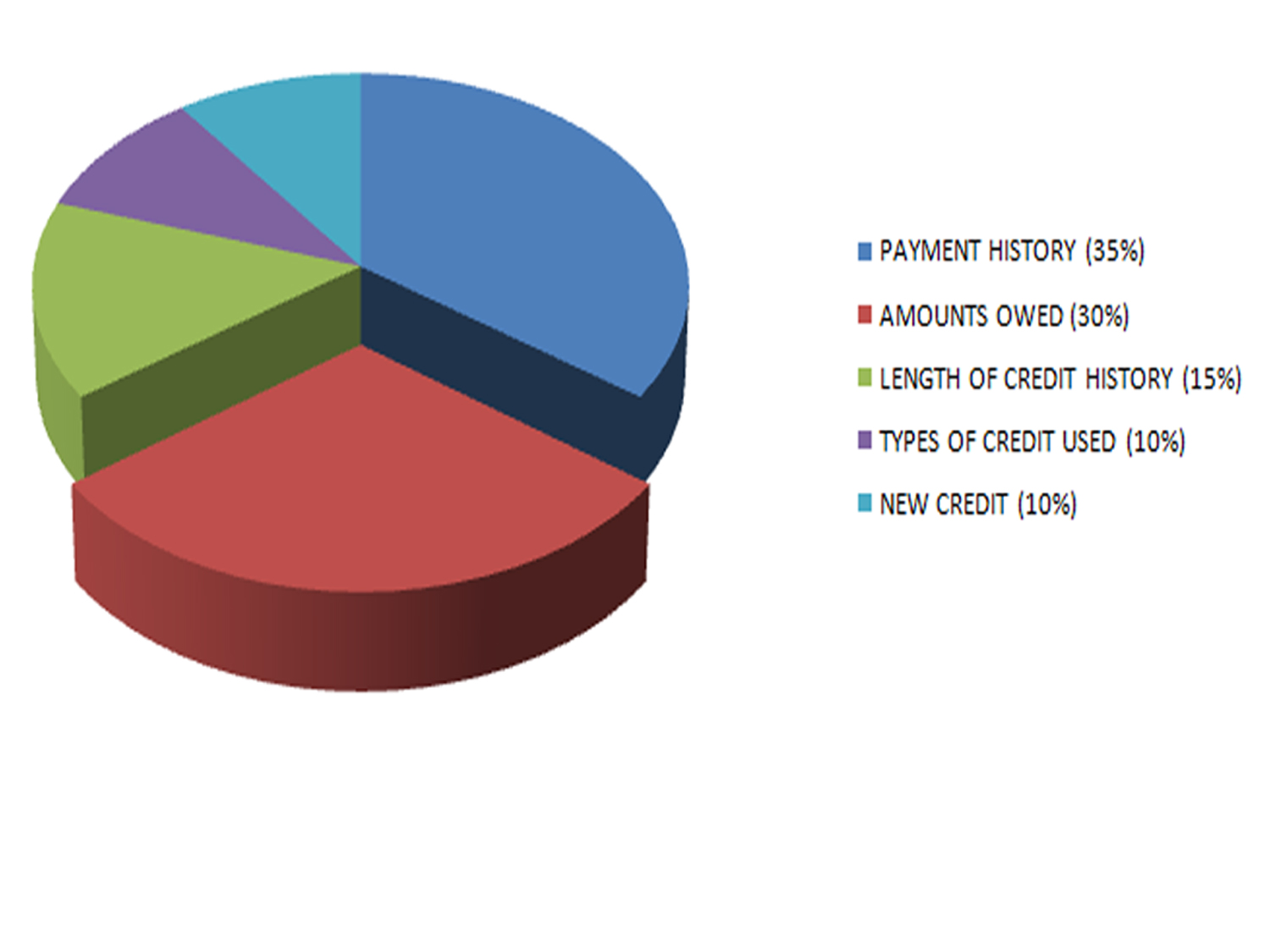
Each person potentially has three credit scores. Each score is based
on five factors and each of these factors is weighed differently.
Click play to learn more or read the text from this video below.
As a mortgage banker I deal with credit on a daily basis. If you have questions about any of the information presented in this video I am available by phone or email.


Money Saving Minute number 010 - How are credit scores calculated?
When credit is run, the three most common questions are: What are my scores, are those scores good or bad and how is that number calculated?
Credit Scores are calculated from several different pieces of credit information. This data is grouped into five categories. Each category is weighed differently and is expressed in the form of a percentage. Your score considers both positive and negative information in your credit report. Late payments will lower your FICO Score, however establishing or re-establishing a good track record of making payments on time will raise your score. These percentages are based on the importance of the five categories for the general population. Every individual's situation is weighed slightly differently. In other words, this is the guideline, not the rule.
 
35% PAYMENT HISTORY
30% AMOUNTS OWED
15% LENGTH OF CREDIT HISTORY
10% TYPES OF CREDIT USED
10% NEW CREDIT
 
Payment history (35%)
This is the most important factors in your credit scoring. A few late payments can have a large impact on your score if you have limited credit. The more trade lines that you have in good standings will determine on how quickly you will earn those points back. Please note, however, having no late payments in your credit report doesn't mean you’ll have perfect credit. Your payment history is just one of the five factors in calculating your credit Scores.
 
Amounts owed (30%)
Owing money on credit accounts doesn't necessarily mean you're a high-risk borrower. However, when a high percentage of a person's available credit is been used, this raises the risk level for a lender and therefore lowers the credit score. Note that even if you pay off your credit cards in full each month, your credit report may show a balance on those cards. The total balance on your last statement is generally the amount that will show in your credit report. In addition to the overall amount you owe, your FICO Score considers the amount you own on specific types of accounts, such as credit cards and installment loans. Carrying a very small balance without missing a payment shows that you managed credit responsibly and having a low credit utilization ratio is a plus for your credit scores. But you need to have to have credit in order to have a score. The misnomer that by paying cash for everything means that you have great credit is false. Cash is king but it doesn’t buy you 700 scores.
Also, closing unused credit accounts that have zero balances and are in good standing will not raise your scores. As a matter of fact, they may actually lower you scores because you are reducing your utilization ratio. If an unused account is costing you money in annual fees, however, than closing the account should be something to consider but only if you have other accounts reporting favorably for you.
 
Length of credit history (15%)
In general, a longer credit history will increase your credit scores. However, even people who haven't been using credit long may have good credit scores, depending on how the rest of the credit report looks.  Your FICO Score takes into account how long your credit accounts have been established, including the age of your oldest account, the age of your newest account and an average age of all your accounts. Scoring also considers how long specific credit accounts have been established and how long it has been since you used certain accounts. This plus utilization ratio are why short term loans do not help to reestablish credit bad credit. A high interest twelve month loan from a store might get you a new TV but it's not going to get you into a higher credit rating. Reestablishing credit takes time and the proper tools.
 
Types of credit in use (10%)
Scoring will consider your mix of credit cards, retail accounts, installment loans, finance company accounts, utilities and mortgage loans. The credit mix usually won’t be a key factor in determining your FICO Score but it will be more important if your credit report does not have a lot of other information on which to base a score.
 
New credit (10%)
Opening several credit accounts in a short period of time represents a greater risk - especially for people who don't have a long credit history. Also, reaching the maximum level on a new account as soon as you open the account can have a negative impact. If you are taking out a line of credit for a specific purchase, such as a new washer and dryer, request a limit that is higher than your purchase. Even if you are planning on paying off the purchase within a short period of time the account will always show that the limit and the historic high balance are the same.
 
Importance of categories varies per person
The importance of any one factor in your credit score calculation depends on the overall information in your credit report. For some people, one factor may have a larger impact than it would for someone with a much different credit history. In addition, as the information in your credit report changes, so does the importance of your other factors in determining your scores. Use these ratios as a guide to build a healthy credit profile as well as a planning tool when making credit related decisions.
 
This has been money saving minute number zero zero nine. It’s your cash and watching the The Money Saving Minute each week will help you keep more of it. Click to the right to subscribe so you don’t miss any money saving tips and click the facebook button below to share this with your friends.


Thursday, September 6, 2012

Turn Off The Lights


Even energy efficient bulbs still require energy to work and leaving lights on in unoccupied rooms has a direct link to your energy bill.  Click play to learn more or read the text from the video below.  If you find this information useful please feel free to share this with your facebook and G+ friends.  And if you know anyone that needs help with their current mortgage or help getting qualified to purchase a home please call me. 


Money Saving Minute #008: Turn Off The Lights (text from video)
This weeks tip is one that we all know because we have been told from the day we could reach the light switch to turn off the lights when we leave a room.  So why don’t we?  Old habits?  Myths about using more energy to turn the light back on?  Or is it that we don’t see the relationship between flipping a switch and our  checkbook?  The amount of money can you save by turning off lights is determined on how many lights you have running, at what power rating and for what amount of time.  For instance if you have one light bulb with a 30 watt rating running for 100 hours that will be 30kW-hours.  If your electricity is being supplied at $0.18/ kW-hour then 30 kW-hours is equal to $5.40.  With numerous lights, turning them off can offer a real saving over a long period of time, not to mention an important environmental benefit.  But doesn’t it take more energy to turn a light on and warm up the bulb than it does to just leave it on?  Well, according to Mythbusters (video).  This has been money saving minute number 007 - It’s your cash and watching the The Money Saving Minute each week will help you keep more of it.  Click to the right to subscribe so you don’t miss any money saving tips and click the facebook button below to share this with your friends.