Dan Dahlen


I am your Wisconsin home loan specialist for life, NMLS #278204 and I work for Inlanta Mortgage, Brookfield WI. I offer all types of lending products from conventional, FHA, 203k, VA, USDA and more. I also offer first time home buyer seminars and well as credit guidance for those that may have had some credit troubles in the past. Buying or refinancing, I want to be your, as well as your friends and families, home loan specialist for life. Contact me for all of your home loan needs.


Thursday, September 13, 2012

How Credit Scores Are Calculated

 
Each person potentially has three credit scores. Each score is based
on five factors and each of these factors is weighed differently.
Click play to learn more or read the text from this video below.
As a mortgage banker I deal with credit on a daily basis. If you have questions about any of the information presented in this video I am available by phone or email.


Money Saving Minute number 010 - How are credit scores calculated?
When credit is run, the three most common questions are: What are my scores, are those scores good or bad and how is that number calculated?
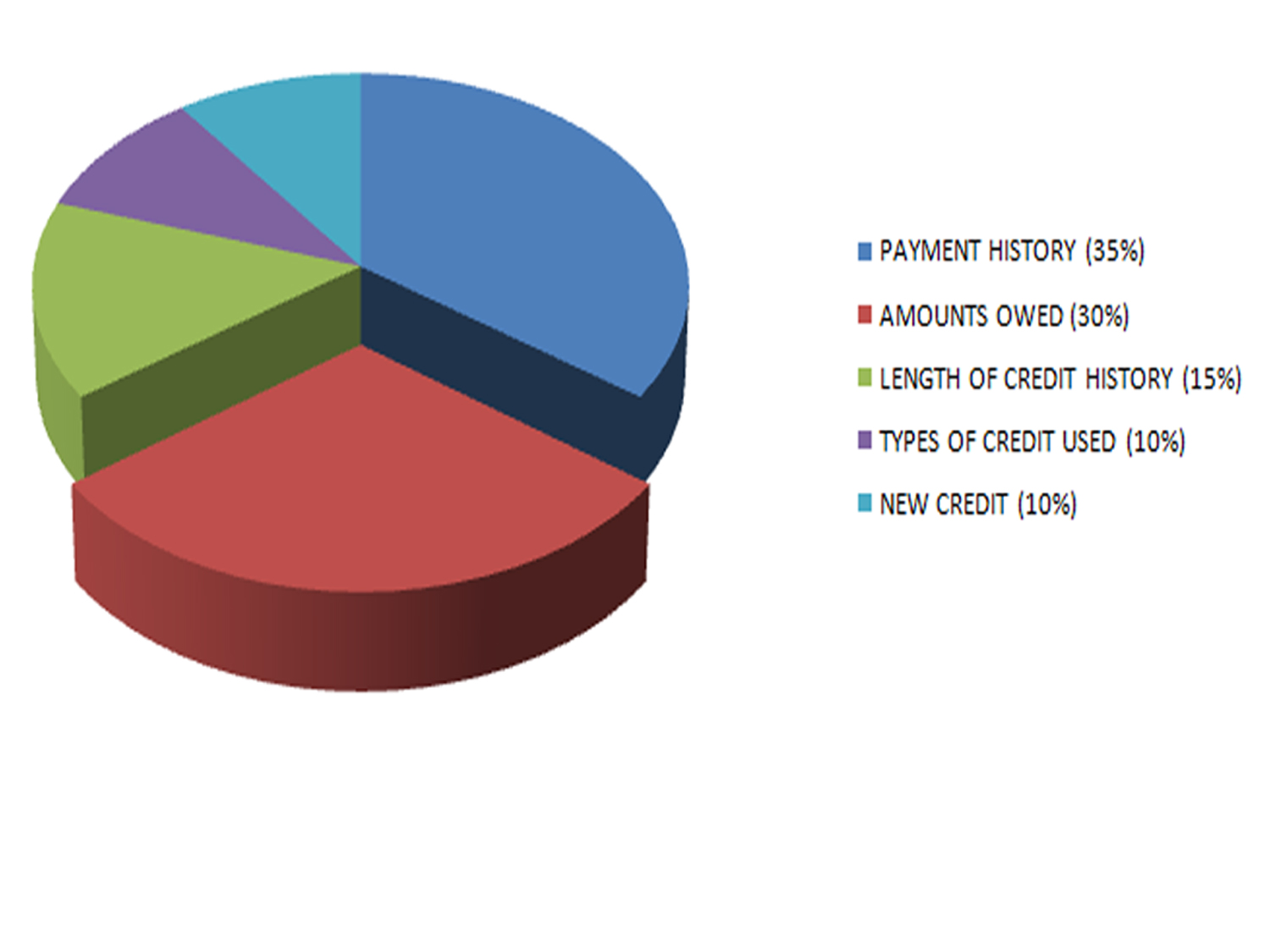
Credit Scores are calculated from several different pieces of credit information. This data is grouped into five categories. Each category is weighed differently and is expressed in the form of a percentage. Your score considers both positive and negative information in your credit report. Late payments will lower your FICO Score, however establishing or re-establishing a good track record of making payments on time will raise your score. These percentages are based on the importance of the five categories for the general population. Every individual's situation is weighed slightly differently. In other words, this is the guideline, not the rule.
 
35% PAYMENT HISTORY
30% AMOUNTS OWED
15% LENGTH OF CREDIT HISTORY
10% TYPES OF CREDIT USED
10% NEW CREDIT
 
Payment history (35%)
This is the most important factors in your credit scoring. A few late payments can have a large impact on your score if you have limited credit. The more trade lines that you have in good standings will determine on how quickly you will earn those points back. Please note, however, having no late payments in your credit report doesn't mean you’ll have perfect credit. Your payment history is just one of the five factors in calculating your credit Scores.
 
Amounts owed (30%)
Owing money on credit accounts doesn't necessarily mean you're a high-risk borrower. However, when a high percentage of a person's available credit is been used, this raises the risk level for a lender and therefore lowers the credit score. Note that even if you pay off your credit cards in full each month, your credit report may show a balance on those cards. The total balance on your last statement is generally the amount that will show in your credit report. In addition to the overall amount you owe, your FICO Score considers the amount you own on specific types of accounts, such as credit cards and installment loans. Carrying a very small balance without missing a payment shows that you managed credit responsibly and having a low credit utilization ratio is a plus for your credit scores. But you need to have to have credit in order to have a score. The misnomer that by paying cash for everything means that you have great credit is false. Cash is king but it doesn’t buy you 700 scores.
Also, closing unused credit accounts that have zero balances and are in good standing will not raise your scores. As a matter of fact, they may actually lower you scores because you are reducing your utilization ratio. If an unused account is costing you money in annual fees, however, than closing the account should be something to consider but only if you have other accounts reporting favorably for you.
 
Length of credit history (15%)
In general, a longer credit history will increase your credit scores. However, even people who haven't been using credit long may have good credit scores, depending on how the rest of the credit report looks.  Your FICO Score takes into account how long your credit accounts have been established, including the age of your oldest account, the age of your newest account and an average age of all your accounts. Scoring also considers how long specific credit accounts have been established and how long it has been since you used certain accounts. This plus utilization ratio are why short term loans do not help to reestablish credit bad credit. A high interest twelve month loan from a store might get you a new TV but it's not going to get you into a higher credit rating. Reestablishing credit takes time and the proper tools.
 
Types of credit in use (10%)
Scoring will consider your mix of credit cards, retail accounts, installment loans, finance company accounts, utilities and mortgage loans. The credit mix usually won’t be a key factor in determining your FICO Score but it will be more important if your credit report does not have a lot of other information on which to base a score.
 
New credit (10%)
Opening several credit accounts in a short period of time represents a greater risk - especially for people who don't have a long credit history. Also, reaching the maximum level on a new account as soon as you open the account can have a negative impact. If you are taking out a line of credit for a specific purchase, such as a new washer and dryer, request a limit that is higher than your purchase. Even if you are planning on paying off the purchase within a short period of time the account will always show that the limit and the historic high balance are the same.
 
Importance of categories varies per person
The importance of any one factor in your credit score calculation depends on the overall information in your credit report. For some people, one factor may have a larger impact than it would for someone with a much different credit history. In addition, as the information in your credit report changes, so does the importance of your other factors in determining your scores. Use these ratios as a guide to build a healthy credit profile as well as a planning tool when making credit related decisions.
 
This has been money saving minute number zero zero nine. It’s your cash and watching the The Money Saving Minute each week will help you keep more of it. Click to the right to subscribe so you don’t miss any money saving tips and click the facebook button below to share this with your friends.


Thursday, September 6, 2012

Turn Off The Lights


Even energy efficient bulbs still require energy to work and leaving lights on in unoccupied rooms has a direct link to your energy bill.  Click play to learn more or read the text from the video below.  If you find this information useful please feel free to share this with your facebook and G+ friends.  And if you know anyone that needs help with their current mortgage or help getting qualified to purchase a home please call me. 


Money Saving Minute #008: Turn Off The Lights (text from video)
This weeks tip is one that we all know because we have been told from the day we could reach the light switch to turn off the lights when we leave a room.  So why don’t we?  Old habits?  Myths about using more energy to turn the light back on?  Or is it that we don’t see the relationship between flipping a switch and our  checkbook?  The amount of money can you save by turning off lights is determined on how many lights you have running, at what power rating and for what amount of time.  For instance if you have one light bulb with a 30 watt rating running for 100 hours that will be 30kW-hours.  If your electricity is being supplied at $0.18/ kW-hour then 30 kW-hours is equal to $5.40.  With numerous lights, turning them off can offer a real saving over a long period of time, not to mention an important environmental benefit.  But doesn’t it take more energy to turn a light on and warm up the bulb than it does to just leave it on?  Well, according to Mythbusters (video).  This has been money saving minute number 007 - It’s your cash and watching the The Money Saving Minute each week will help you keep more of it.  Click to the right to subscribe so you don’t miss any money saving tips and click the facebook button below to share this with your friends.


Thursday, August 30, 2012

Credit Cards and How They Affect Your Credit Score

 
Do you know how credit cards affect your FICO score? 
Even if you make your payments on time you
could still be loosing points each month. 
Click Play To Watch or Read Video Text Below.
 
If You Have Troubles Viewing Video Click Here to Watch on YouTube 


Money Saving Minute #007: How Credit Cards Affect Your Credit Scores and How To Pay Them Off (text from video). 

Credit cards can be your credit score’s best friend or worst enemy.  When used properly credit cards will give your scores a real boost.  But what is the proper way of using a credit card?  First, Credits cards should be used as a convenience or a way of earning cash back and rewards.  Credit cards should not be used as a crutch or treated as an extension of your buying power. 

Second guideline of credit cards is pay them off each month.  If you keep a rolling balance you are paying interest and wiping out all of the savings that your reward points would have given you.   

Third, if you do keep a rolling balance keep the balance under 30% of the available credit line.  0 to 10% is best, up to 30% is okay but more than 30% may actually start costing you points.  Your utilization ratio or the amount you owe in comparison to the amount of the credit line, is 30% of your credit score.   

The fourth guideline, is the obvious one – pay the bill on time.  Even if it means only making the minimum payment, make sure that you make that payment prior to the due date.  Payment history is 35% of your credit score and late payment stick with you.   

Finally, don’t close accounts.  Keeping accounts open will give you more breathing room with your utilization ratio.  Also, length of credit history is for 15% of your credit score so if you close an account that you have had for a long history with you may actually hurt your score. 

Now let’s talk about how to pay off credit cards.  Below this video is a link to download an excel workbook called “Credit Card Calculator”.   

With this workbook you can determine how long it will take to pay off a card or you can set a goal of when you would like to have the card paid off by and it will calculate how much you should be paying each month.  If you have several cards that you would like to pay off work on them one at a time.  Splitting up your available funds between all of your accounts will get you nowhere fast however still be sure to make the minimum payments on each account.   

Choosing which card to pay off first is a matter of weighing all of the factors.  You may choose to work on the account with the highest interest rate first.  You may look at paying off the card with the highest balance first because you are paying more interest each month or you may look at paying off the card with the lowest balance first.  Paying off the card with the lowest balance is many times the most effective because once it’s paid off you can use what was budgeted as the minimum payment for that account toward paying off the next account in line.  

This has been money saving minute number zero zero seven.  It’s your cash and watching the The Money Saving Minute each week will help you keep more of it.  Click to the right to subscribe so you don’t miss any money saving tips and click the facebook button below to share this with your friends.

Thursday, August 23, 2012

How are you at budgeting your finances? Budgeting doesn't mean giving up what you enjoy, it means knowing where your money is going. Click play to learn more or read the text from the video below.
If You Have Troubles Viewing Video CLICK HERE to Watch on YouTube

Money saving minute #006: Your Household & Personal Budgets (text from video).
     
Some people are very good at budgeting yet others need a little help.  Either way, having a budget in writing is helpful.  Below this video is a link to download an Excel workbook to help put your personal budget in writing. 
 
For those of you that are good at working with a budget this workbook will help you stay on track.  It will also help you achieve your saving goals by helping you track where you money is going.  Also, when two or more people are working within the same budget having a spreadsheet like this set up will help to avoid those little misunderstandings that lead to money arguments.
 
For those that are not so good at budgeting, or those that are confused as to how to start a budget, let’s talk budgeting 101.  Budgeting does not mean going without.  Budgeting simply means knowing where you money is going. 
 
Step one, download the workbook.  It’s free so it will fit into your new budget.  Step two, take a look at all of the categories but don’t fill in any numbers yet.  Step three, for the next 30 days carry a small notebook with you and track your spending.  Write down every purchase from grocery shopping to your lunchtime vending machine soda to the five dollars you put into the football pool.  Step four, gather up all of your bills as well as your last two paycheck stubs.  Step five, make a list of all of the non-monthly expenses that come up such as buying birthday gifts, vehicle registration and planning for your medical deductable.  Step six is to take all of this data and start building your budget.  As you are entering in your information look for things that you can do differently to help you save money but be realistic.  If changing a spending habit looks good on paper but you truly don’t have any intention of changing that habit then there is no sense in writing it down.
 
Finally, for those that struggle with budgeting due to impulse buying, check out Money Saving Minute #002, The 30 Day Rule.
 
This has been money saving minute number zero zero six.  It’s your cash and watching the The Money Saving Minute each week will help you keep more of it.  Click to the right to subscribe so you don’t miss any money saving tips and click the facebook button below to share this with your friends.

Thursday, August 16, 2012

Money saving minute #005: Save Gas, Save Money

This week's video asks the questions:
What can I do to get the most for my fuel dollar?

Click Play To Watch or Read The Text From The Video Below

If You Have Troubles Viewing Video Click Here to Watch on YouTube

----------------------------------------------------------------------------------------------------------------

Money saving minute #005: Save Gas, Save Money 

Gas prices are no joke but we all have places to be.  We can’t just stop driving, so what can we do to get every last mile out of each tank of gas?  The US Department of Energy’s website, fuel economy dot gov, lists out four tips to help drivers get the most miles for their money. 
 
First, drive more efficiently.  Aggressive driving such as speeding, rapid acceleration and braking waste gas and can lower your gas mileage by 33 percent at highway speeds and by 5 percent around town.  
    
Second, keep your vehicle in shape.  Properly inflated tires may improve your gas mileage by up to 3 percent and having your engine properly tuned may up your MPG by up to 4 percent.

Third, Plan and combine trips.  Combining errands into one trip saves you time and money.  Several short trips taken from a cold start can use twice as much fuel as a multipurpose trip covering the same distance when the engine is warm.  Also, if you have the ability to staggering your work hours so that you are not driving in rush hour’s stop and start traffic you will improve your gas mileage.

Finally, the US Department of Energy suggests selecting a more fuel efficient vehicle as your mode of transport.

For more information about how to get the most out of your gas dollar visit
fuel economy dot gov (www.fueleconomy.gov).

This has been money saving minute number zero zero five.  It’s your cash and watching the The Money Saving Minute each week will help you keep more of it.  Click to the right to subscribe so you don’t miss out on any money saving tips and click the facebook button below to share this with your friends.


Thursday, August 9, 2012

Dan's Money Saving Minute #004: Switch Your Bank Accounts

This week's video asks the questions:
"Is your bank earning your business" and "what to do if they aren't".
Click Play To Watch or Read The Text From The Video Below


If You Have Troubles Viewing Video
Click Here to Watch on YouTube

Do you have a good relationship with your bank?  Is your bank paying you interest on your checking?  More importantly, does your bank nickel and dime you with miscellaneous fees?  If you are losing money to your bank each month then it may be time to think about switching.
 
When you find a bank that wants your business, switching is not difficult, but it does take a little time and planning.  This planning and time are the main stressors that keep customers with their current bank and consequently keep them paying unnecessary fees.  But really, switching is not that difficult.

1. Open the new checking account. The first step is the most obvious one.

2. Make a detailed list of all automated withdrawals and deposits from your current account.

3. Balance your checkbook. Make sure you’ve accounted for everything outstanding so there are no surprises during the transition.

4. Switch over all of your deposits then all of your withdrawals.  If you are concerned that a withdrawal may come up before your deposits catch up to your new account then you may want to temporarily link those withdrawals to a credit card – preferably one that pays you a bonus.

5. Leave the old account open with a small balance for a couple of months just to be sure that you have switched over all of your deposits as well as auto drafts.

6. The last step is to close the old account.

This has been money saving tip number zero zero four.  It’s your money and watching the The Money Saving Minute each week will help you keep more of it.  Click to the right to subscribe so you don’t miss out on any money saving tips and please click the facebook button below to share this with your friends.

Thursday, August 2, 2012

Dan's Money Saving Minute #003

Make a
List Before
You Go Shopping
Press Play or Read Below


If you have trouble viewing video please click here to watch on YouTube

A few minutes of planning could save you a bundle as well as save you the time and fuel of multiple trips to the store.  Your shopping list should start with a plan.  I know it’s not east to know on Wednesday what you are going to want for dinner on Saturday but there are ways around this.  Instead of planning what day you are going to have something, just plan the meals.  Then you can decide during the week which day you will have each meal.  Next, make out your list. Finally, take a few minutes to look for coupons and sales.  Once you get to the store make sure that you stick to your list.  Don’t be swayed by in store sales to buy more.  Instead, substitute a planned meal for something that you found on sale.  Your time and preparation will pay off if you stick to your plan.
 
This has been money saving minute number 003.  Subscribe to the left so that you don’t miss any of our money saving tips and click below to share this with your friends.

For information about financing the home of your dreams, refinancing your current home, 203k home restoration loans or loan options such as no PMI conventional loans, FHA and VA loans or first time
home buyer education please contact Dan Dahlen Inlanta Mortgage Home Loan Specialist at
262-754-6473 or email 
DanDahlen@inlanta.com

I hope you enjoyed and will visit again soon.